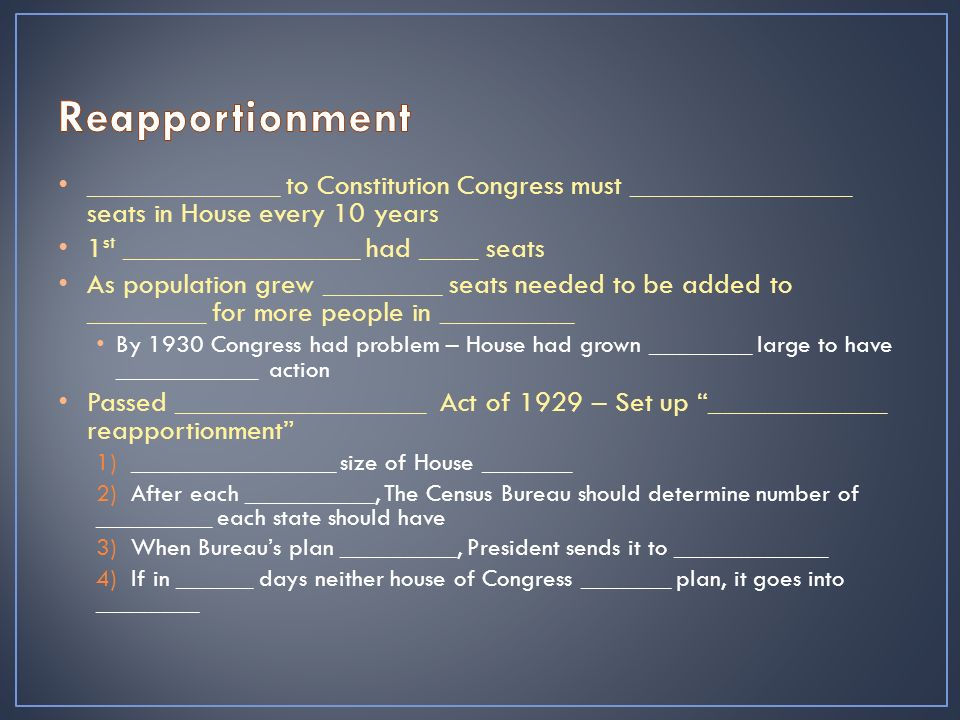
39 congress must reapportion seats in the house of representatives every
us government- chapter 10 & 11 study guide ... - Quizlet a distribution of house seats among the states. gerrymandering. ... congress must reapportion seats in the house of representatives every _____ years. congress. what determines the total number of seats in the house of representatives. the people of the states. who elects the senators. listen to their constituents views. Text - H.R.4350 - 117th Congress (2021-2022): National ... Text for H.R.4350 - 117th Congress (2021-2022): National Defense Authorization Act for Fiscal Year 2022
How does congress reapportion house seats among the states ... How often does the Constitution require Congress to reapportion seats in the House of Representative? The Constitution requires seats in the House to be reapportioned every ten years. What does it...
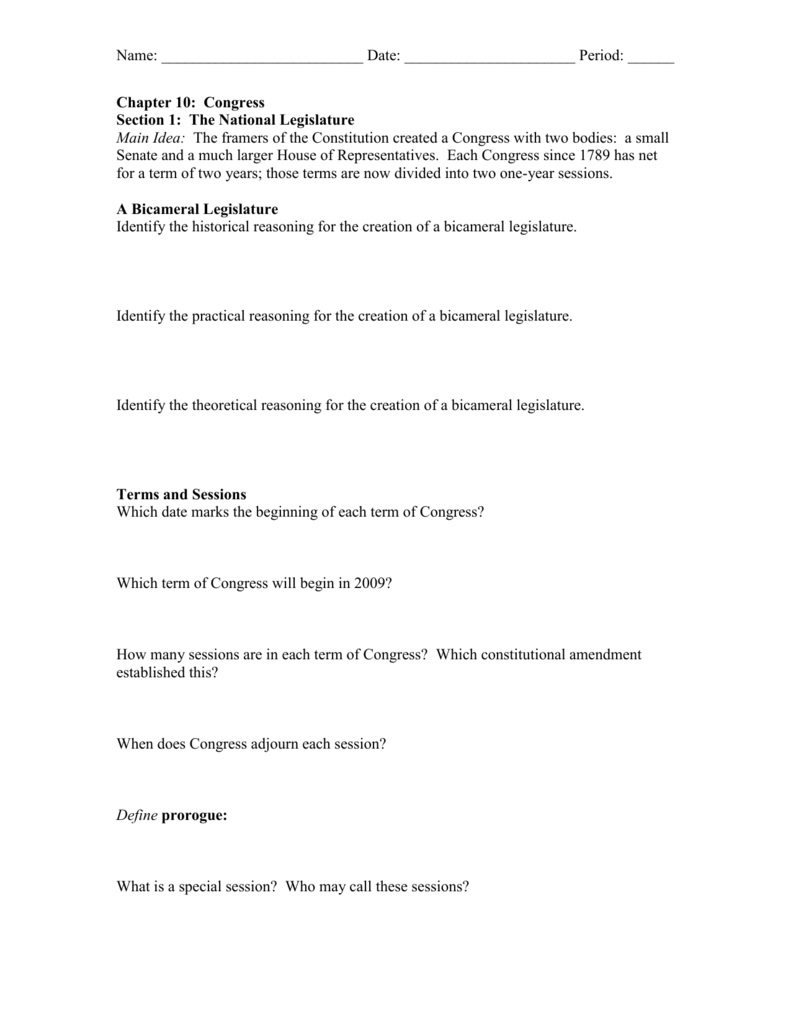
Congress must reapportion seats in the house of representatives every
PDF CHAPTER Name CHAPTER OUTLINE (continued) Congress B. Reapportionment Class Date Every 10 years after each the Census Bureau decides on the number of House seats for each state. C. Congressional Districts Each member of the House of Representatives is elected from a in his or her state. D. DOC Worksheet-the Congress - Pc\|Mac d. at least one seat in the House. ___ 18. Puerto Rico: a. is represented in the House by a Resident Commissioner. b. is not represented in Congress. c. is represented by a non voting delegate. d. has only one Representative in the House. ___ 19. The Constitution directs Congress to reapportion seats in the House based on: a. the decennial ... Congressional Apportionment - Census.gov Congressional Apportionment Congressional Apportionment The Constitutional basis for conducting the decennial census is to reapportion the U.S. House of Representatives. Apportionment is the process of dividing the 435 memberships, or seats, in the U.S. House of Representatives among the 50 states. About Congressional Apportionment
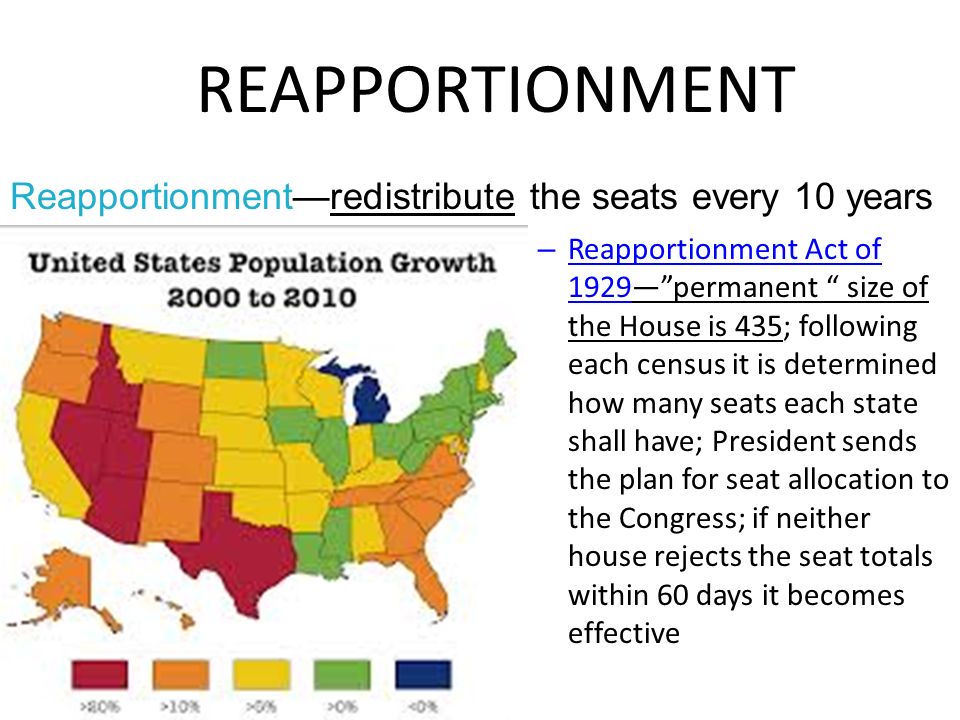
Congress must reapportion seats in the house of representatives every. History - Texas 1990s Timeline PDF Texas Senate and Texas House Redistricting The regular session of the 72nd Legislature passed bills redrawing senate and house district boundaries in the 1991 regular session, which were signed by the governor. During 1991, suits were filed in state district court and federal district court asserting various voting rights violations against the adopted ... Reapportionment - Definition, Examples, Cases, Processes Reapportionment is the official redistribution of representation in a ruling body, such as Congress. By Federal law, there are 435 total congressional districts that make up the House of Representatives. Every ten years, a census is taken of the United States' population, and then the total number of American citizens is divided in order to ... How are US congressional districts determined? Congress reapportion House seats among the states every 10 years by the census that is taken to decide what states gain representatives and what states lose representatives. Each term of Congress begins on January 3 after the election of the previous November and it runs for six-year terms. House of Representatives of the Philippines - Wikipedia The House of Representatives of the Philippines (Filipino: Kapulungan ng mga Kinatawan ng Pilipinas) is the lower house of the Congress of the Philippines.Informally known as the Kamara (from the Spanish word Cámara, meaning "chamber"), the lower house is usually called Congress, although the term collectively refers to both houses.. Members of the House are …
How Many Seats In The House? Top Full Guide 2021 - Focal ... Sep 16, 2021 · The United States Congress consists of two houses, the House of Representatives and the Senate. Each state elects two senators. The House of Representatives seats is allocated by state based on population. Each state receives at least one representative. The House of Representatives used to grow in size with each decennial census. Gopo ch 10 - Subjecto.com Congress must reapportion seats in the House of Representatives every A. Two years B. four years C. Six years D. Ten years. D. Ten years. What determines the total number of seats in the House of Representatives? A. The census bureau B. the Supreme Court C. Congress D. The constitution. C. Congress Dividing the House: Why Congress Should Reinstate an Old ... Every ten years, a new census leads to a constitutionally mandated reapportionment of the House of Representatives. Inevitably, this process has major political consequences, and the 2000 census ... Congressional district maps implemented ... - Ballotpedia Dec 14, 2018 · The House of Representatives overrode Kelly’s veto 85-37 on February 9, 2022, with all votes in favor by Republicans, and 36 Democrats and one Republican voting to sustain the veto. The Senate overrode Kelly’s veto 27-11 strictly along party lines on February 8, 2022, with all votes in favor by Republicans and all votes opposed by Democrats.
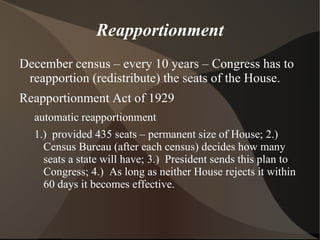
Reapportioning | US House of Representatives: History, Art ... Within 15 days, the Clerk must then disclose to the governor of each state how many seats his or her state is entitled. The state legislatures are charged with redrawing a state's congressional districts. Apportionments take effect two Congresses (three years) after the last census. How often does reapportionment occur for the house ... How often does reapportionment occur for the house? It permanently set the maximum number of representatives at 435. In addition, the law determined a procedure for automatically reapportioning House seats after each census. (Reapportionment takes effect three years after the census.) How often does reapportionment occur? Gopo ch 10 Flashcards - Quizlet how often does the Constitution require Congress to reapportion seats in the House of Representatives? a. every two years b. every four years c. every six years d. every ten years d. every ten years which is true about a senator's term in office? a. it is three times longer than the term of a member of the House The House of Representatives Flashcards - Quizlet Every 10 years, according to the Constitution, a census is taken in the United States. As the population of the country grew, more seats were added to the House of Representatives. This practice continued until 1920, when the number of seats rose to 435. The House of Representatives had grown too large, and Congress decided not to add any more ...
Chapter 10: Congress
New Census Estimates Project Congressional Apportionment ... Congressional apportionment is a process outlined in the constitution that guides how many representatives each state gets in the U.S. House of Representatives. Every ten years, the decennial ...

Congress | National Geographic Society
Politics Chapter 10 Flashcards - Quizlet Congress must reapportion seats in the House of Representatives every _ years Voters in each state Senators are elected by Congress What determines the total seats in the House of Representatives Listen to constituents' views Due to the length of their terms, House members may be more likely to Senators must be more qualified than House members
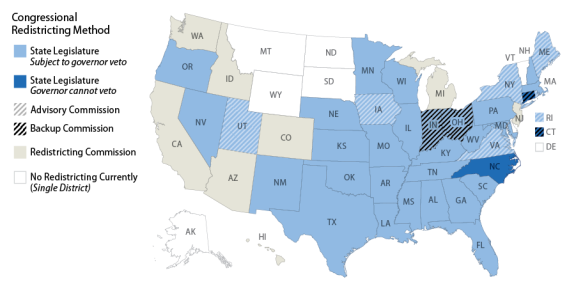
Apportionment and Redistricting Process for the U.S. House of ...
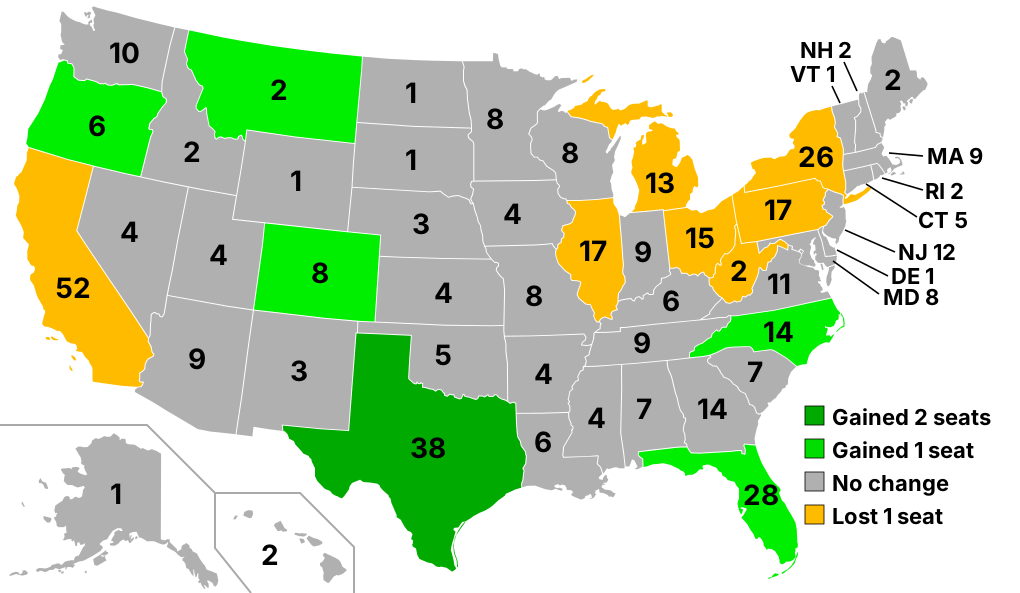
United States congressional apportionment - Wikipedia United States congressional apportionment is the process by which seats in the United States House of Representatives are distributed among the 50 states according to the most recent decennial census mandated by the United States Constitution.Each state is apportioned a number of seats which approximately corresponds to its share of the aggregate population of the 50 states.

Which States Won — And Lost — Seats In The 2020 Census ...
U.S. Government - Unit 10 Test Flashcards - Quizlet Congress must reapportion seats in the House of Representatives every ten years. Due to the length of their terms, House members may be more likely to listen to constituents' views. More than half of the members of the Senate are lawyers What is the most likely explanation for a congressional district to change shape?
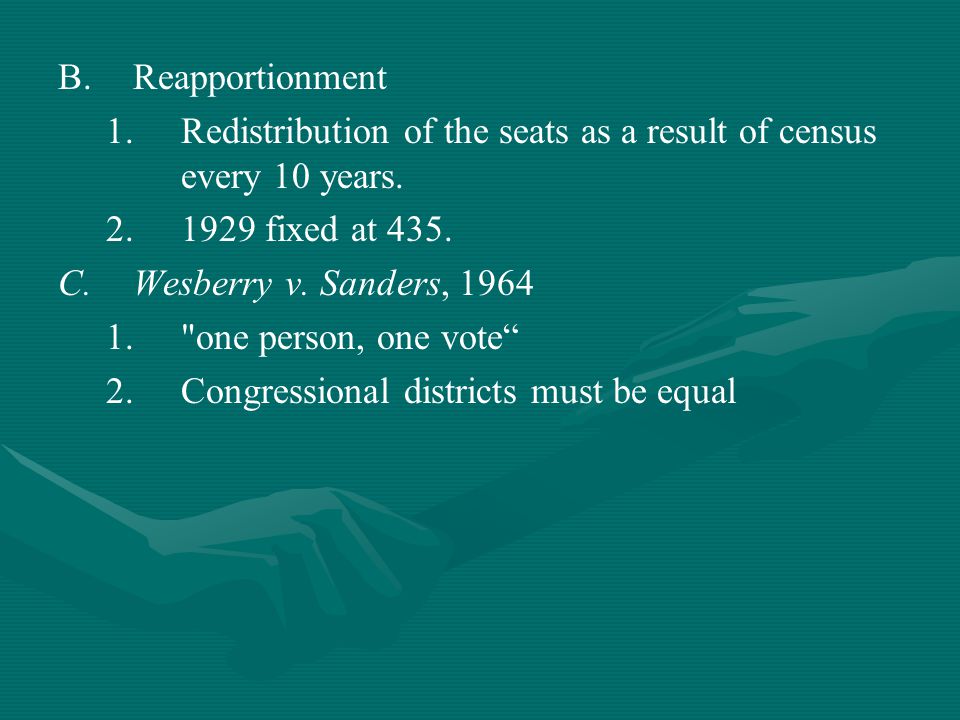
The Congress Chapter 10. I. The House of Representatives A ...
Study 50 Terms | Government: Chapters... Flashcards | Quizlet Congress must reapportion seats in the House of Representatives every 10 years Article V of the Constitution allows for the proposal of amendments to the Constitution by a two-thirds vote in each house of Congress Each State's representation in the Senate is equal of that of every other State

American Government, Delivering Collective Action: Formal ...
What Was The Effect Of The Reapportionment Act Of 1929 On ... Apportionment is the process of dividing the 435 memberships, or seats, in the U.S. House of Representatives among the 50 states. Why is it important to reapportion the House after every census quizlet? The Constitution directs the Congress to reapportion the House after each decennial census. What does that mean?

THE HOUSE OF REPRESENTATIVES. House of Representatives. - ppt ...
Question: Why are there 435 representatives? - Answers to ... When was the House of Representatives current size of 435 members? § 2a), also known as the Permanent Apportionment Act of 1929, is a combined census and apportionment bill passed by the United States Congress on June 18, 1929, that establishes a permanent method for apportioning a constant 435 seats in the U.S. House of Representatives according to each census.
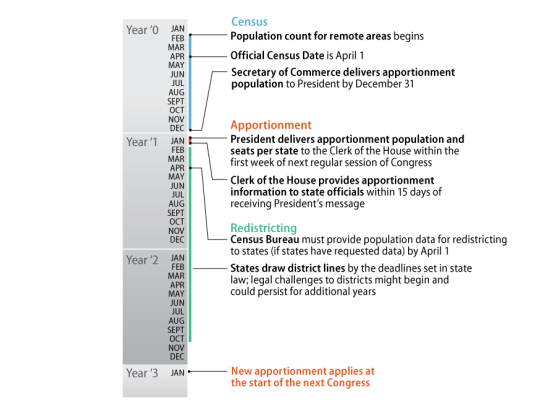
Apportionment and Redistricting Process for the U.S. House of ...
American Federalism, 1776 to 1997: Significant Events Sep 13, 1996 · Taking control of the House of Representatives after 40 years in the minority, the new Republican majority moved quickly to fulfill its Contract with America. Among the accomplishments of the 104th Congress was the passage of the Unfunded Federal Mandate Reform Act of 1995, P.L. 104-4, which requires the federal government to assess the cost ...
Unit 5. Unit 5, Notes 1 We live in a democracy That means we ...
Text - S.1605 - 117th Congress (2021-2022): National ... Text: S.1605 — 117th Congress (2021-2022)All Information (Except Text) Listen to this page There are 5 versions: Public Law (12/27/2021) Enrolled Bill Engrossed Amendment House (12/08/2021) Engrossed in Senate (06/09/2021) Introduced in Senate (05/13/2021)

Opinion | America Needs a Bigger House - The New York Times
New York's 14th Congressional District - Ballotpedia New York's 14th Congressional District in the United States House of Representatives is represented by Alexandria Ocasio-Cortez (D).. As of the 2020 Census, New York representatives represented an average of 748,194 residents. After the 2010 Census, each member represented 717,707 residents.

Update on the Census, Reapportionment, and Redistricting ...
The Permanent Apportionment Act of 1929 | US House of ... The U.S. Constitution called for at least one Representative per state and that no more than one for every 30,000 persons. Thus, the size of a state's House delegation depended on its population. But the founders were vague as to how large future Congresses should be and what method to use to reapportion the House after each federal census.
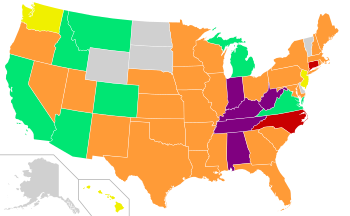
2020 United States redistricting cycle - Wikipedia
Congressional Apportionment - Census.gov Congressional Apportionment Congressional Apportionment The Constitutional basis for conducting the decennial census is to reapportion the U.S. House of Representatives. Apportionment is the process of dividing the 435 memberships, or seats, in the U.S. House of Representatives among the 50 states. About Congressional Apportionment
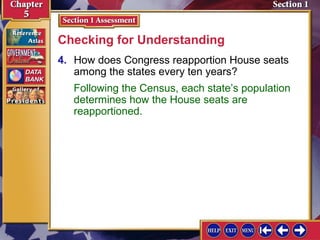
LOUSG chapter 05
DOC Worksheet-the Congress - Pc\|Mac d. at least one seat in the House. ___ 18. Puerto Rico: a. is represented in the House by a Resident Commissioner. b. is not represented in Congress. c. is represented by a non voting delegate. d. has only one Representative in the House. ___ 19. The Constitution directs Congress to reapportion seats in the House based on: a. the decennial ...

The Permanent Apportionment Act of 1929 | US House of ...
PDF CHAPTER Name CHAPTER OUTLINE (continued) Congress B. Reapportionment Class Date Every 10 years after each the Census Bureau decides on the number of House seats for each state. C. Congressional Districts Each member of the House of Representatives is elected from a in his or her state. D.

Chapter_10

Illinois To Lose 1 Congressional Seat After Census Shows ...
Apportionment and Redistricting Process for the U.S. House of ...

To make the House of Representatives work again, make it ...
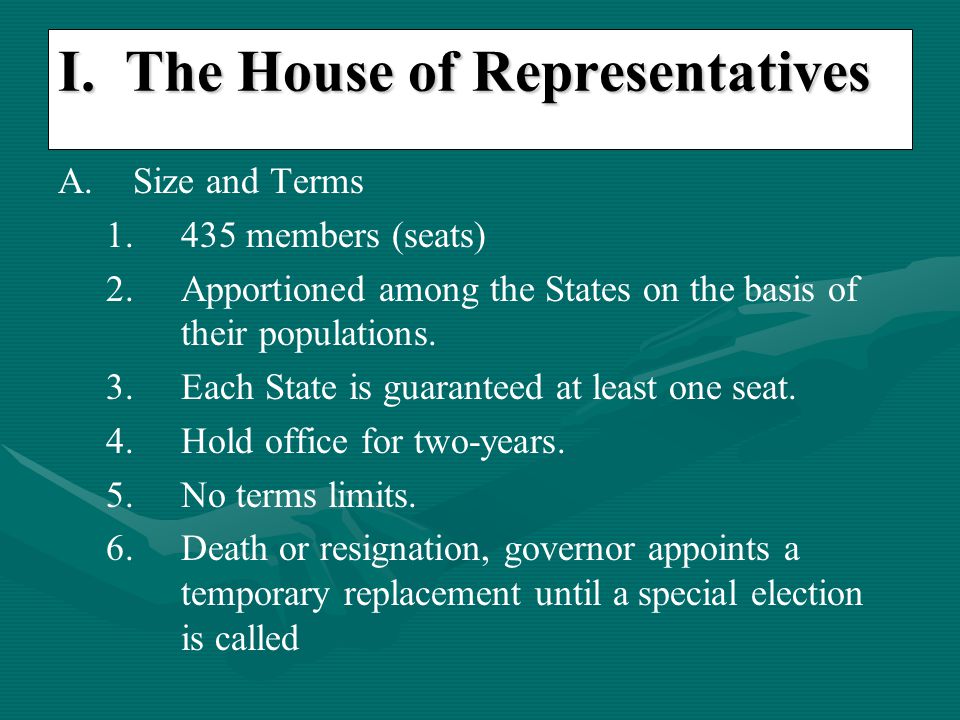
The Congress Chapter 10. I. The House of Representatives A ...
Chapter 10 government notes
United States congressional apportionment - Wikipedia

Which States Will Gain or Lose Seats in the Next Congress ...
CH 10 Congress GOV'T
2020 Census Shifts Power With States Gaining, Losing House ...
DAY 11: Congressional Districts TLW: Define gerrymandering ...
Redistricting: An Explainer. What are the Census ...

California set to lose congressional seat for first time ever
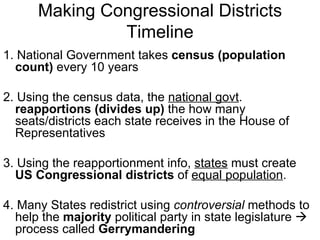
Hsa Review_Unit Four
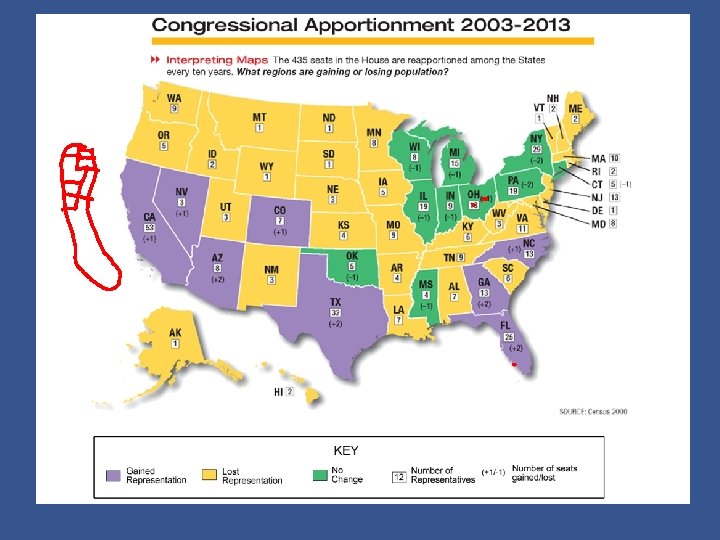
Chapter 10 Congress Section 2 Objectives 1

Reapportionment & Redistricting for Congressional Constituencies: Definition & Process Video

Chapter 10 Section 2 Objective: To understand the structure ...

17 States That Will Gain or Lose Electoral-College Votes ...
The U.S. House of Representatives Apportionment Formula in ...
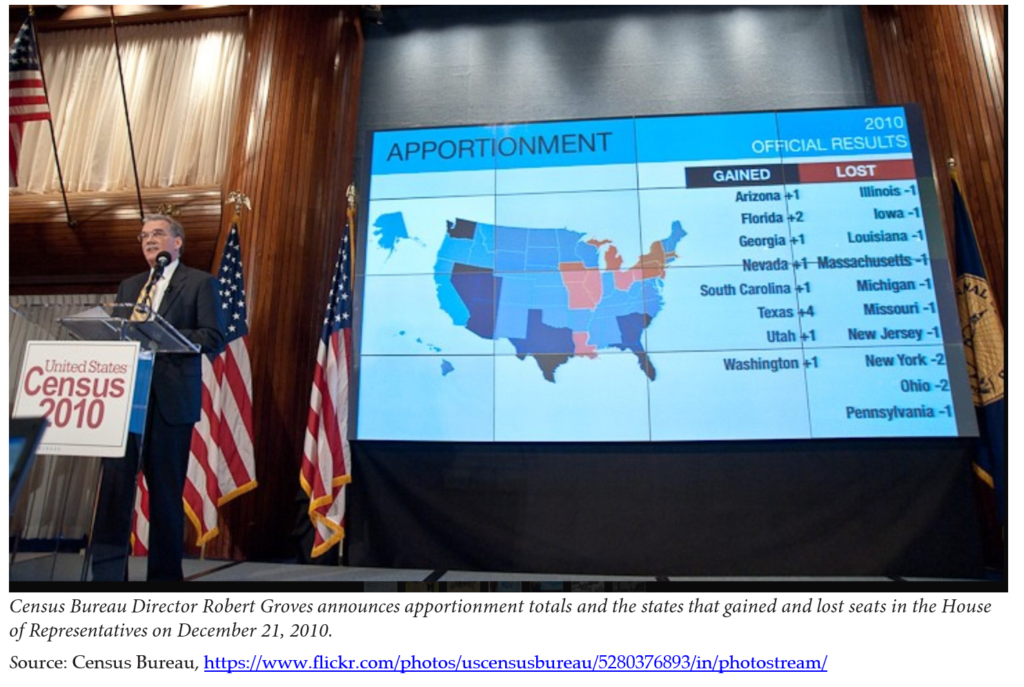
Reapportionment in the Supreme Court | The Rose Institute of ...

Republicans Won Almost Every Election Where Redistricting Was ...
Untitled

Illinois will lose one member in Congress beginning in ...

File - Mr. Ray Hill

West Virginia to lose U.S. House seat after Census ...
0 Response to "39 congress must reapportion seats in the house of representatives every"
Post a Comment